When you’re single in a world built for two, people don’t just look at you. They look through you, searching for the person who’s supposed to be standing next to you.
It starts with the “plus-one” line on the wedding invite, but it seeps into the everyday:
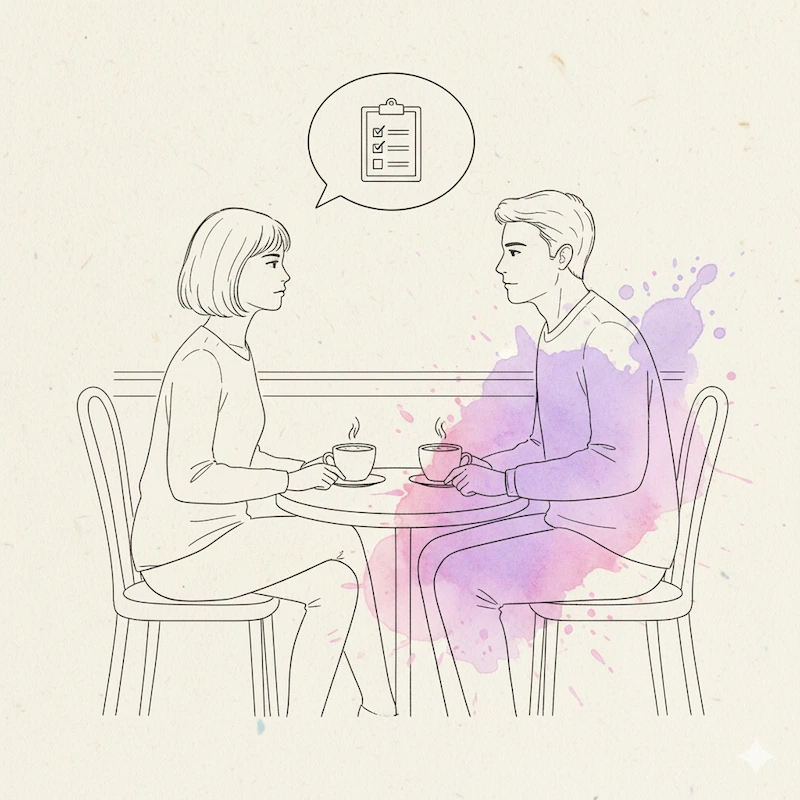
- The way the waiter looks at you when you ask for a table for one
- The way your married friends talk about “settling down” as if you’re currently floating aimlessly in space
- And the way your parents ask about your dating life before they ask about your promotion
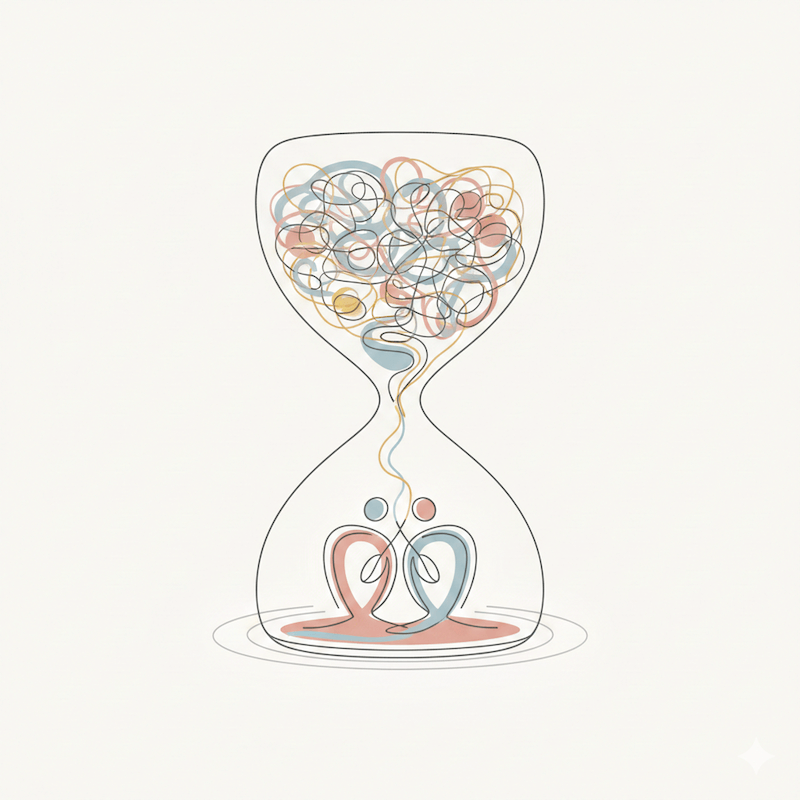
You begin to feel like a half-finished project. A house with the frame up but no roof. A book that ends abruptly at chapter five.
This isn’t just about being single; it’s about an identity crisis.
It’s the exhausting work of trying to feel like a whole person when society keeps handing you a “discount” on your humanity because you haven’t checked the “partnership” box.
If you feel like you’re waiting for your life to start, or like you’re a “failed” version of an adult, this is for you.
The social engineering of the “half-person”
My research into thousands of digital conversations from 2024–2026 shows that the “identity crisis” of the single person isn’t internal—it’s projected.
The “unfinished project” syndrome
In online spaces, a recurring pain point is the feeling that you’re a “work in progress.”
People treat your singleness as a problem to be solved rather than a state of being.
You aren’t “Sarah, the brilliant architect who loves trail running”; you’re “Sarah, who we really need to set up with that guy from accounting.”
When people focus solely on your lack of a partner, they end up communicating that everything else you’ve built—your career, your friendships, your inner peace—is just a placeholder.
The dual-income stigma
There’s a literal financial and logistical “singles tax.” Modern life is aggressively designed for couples.
From the cost of housing to the “family-sized” portions at the grocery store, being single is treated as a luxury you shouldn’t want or a temporary struggle you’re meant to outgrow.
This financial pressure reinforces the idea that you’re “incomplete” because you can’t afford the lifestyle society deems “standard” for your age.
The “biological timer” gaslighting
For women, especially, the identity crisis is tied to the “biological clock.”
Research highlights a massive trend of “fertility anxiety,” where women in their late 20s feel they have to “fast-forward” through the getting-to-know-you phase of dating because they’re on a deadline.
This turns dating from a way to meet a person into a high-stakes job interview for a co-parent, further stripping away your individual identity.
The anatomy of the crisis: Why you feel like you’re fading
Why does being single when everyone else is coupled feel like an identity crisis?
Because we’re social creatures, and we use others as mirrors.
When every mirror around you reflects a “couple,” you start to wonder if you’re invisible.
1. The loss of the “milestone” map
In a couple-centric world, milestones are easy: Engagement. Wedding. House. Baby. Number two.
When you’re single, you lack these socially-affirmed markers of “progress.”
You might have learned a new language, saved for a down payment, or healed from a decade of trauma, but because there was no “celebration” for it, it feels like it didn’t count.
You feel left behind.
2. The “substitute” social life
As friends partner up, you often find yourself as the “supplementary” friend.
You’re the one they call when their husband is on a work trip or when they need a break from the kids.
You start to see yourself as a “utility” rather than a person. You aren’t the main character in your social circle; you’re the guest star.
Related:
How to handle the “friendship demotion” when they get a partner
3. The internalized defect
After enough “why are you still single?” questions, you start to look for the “glitch.”
You begin to wonder if there’s a secret personality flaw that everyone else can see but you.
This leads to “over-healing”—the exhausting cycle of trying to “fix” yourself through endless therapy, self-help books, and “shadow work” until you’re “perfect enough” to be loved.
Relearning how to be a person (not a project)
Healing from the “half-finished” feeling requires a radical shift in perspective.
You have to stop viewing your life as a waiting room and start viewing it as the penthouse.
1. Reclaim your “third spaces”
One of the biggest pain points identified in recent research is the loss of “third spaces”.
These are places where you exist outside of work or home that aren’t dating-focused.
The Fix: Find a community that’s based on what you do, not who you date.
Whether it’s a climbing gym, a book club, or a volunteer group, being in a space where “Are you seeing anyone?” isn’t the first question asked is vital for reclaiming your sense of self.
Related:
The 5 best official places in LA to easily meet people
2. Invent your own milestones
If society won’t throw you a party for your accomplishments, throw your own.
The “solo milestone”: Celebrate the anniversary of your promotion. Throw a “housewarming” for your apartment, even if you’ve lived there three years.
Commemorate the date you finally felt “okay” after a hard year.
When you mark your own progress, you tell your brain that your life is happening now, not “someday.”
3. Stop the “unpaid internship” of self-improvement
You do not need to be a “healed, optimized, 10/10 version of yourself” to be worthy of a relationship. Or, more importantly, to be worthy of a good life.
The reality check: Look at the “coupled” people around you. Are they all perfectly healed? Are they all “finished projects”?
Of course not. They’re messy, flawed humans who just happened to meet someone.
Stop treating your singleness as a “rehab” period. You’re allowed to be “under construction” and still be a whole, valid person.
4. The power of “selective socializing”
If being around a certain group of friends makes you feel like a “pity case,” take a step back.
Audit your circles: Spend more time with “long-term single” mentors—people who are older, single, and thriving. They’re proof that the “half-finished” narrative is a lie.
Also, lean into friends who are in “stale” marriages; they will be the first to remind you that being “partnered” is not a synonym for being “happy.”
A peace of mind for the “half-finished”
The world is loud, and it’s biased. It will try to tell you that you’re a “fragment” until you find your “other half.”
But remember: Two halves don’t make a whole; they make two half-empty people.
The most radical thing you can do is to be a whole, happy, single person who refuses to apologize for it.
You aren’t a project. You aren’t a “to-be-continued” story.
You’re the entire book, and the current chapter is spectacular. Not because of who is in it, but because you are the one writing it.
You aren’t waiting for your life to start. You’re currently living the “good old days.”
Don’t spend them looking at the door, waiting for someone to walk in and tell you that you’ve finally finished.
You were finished the day you were born. Everything else is just a bonus.